Quivr
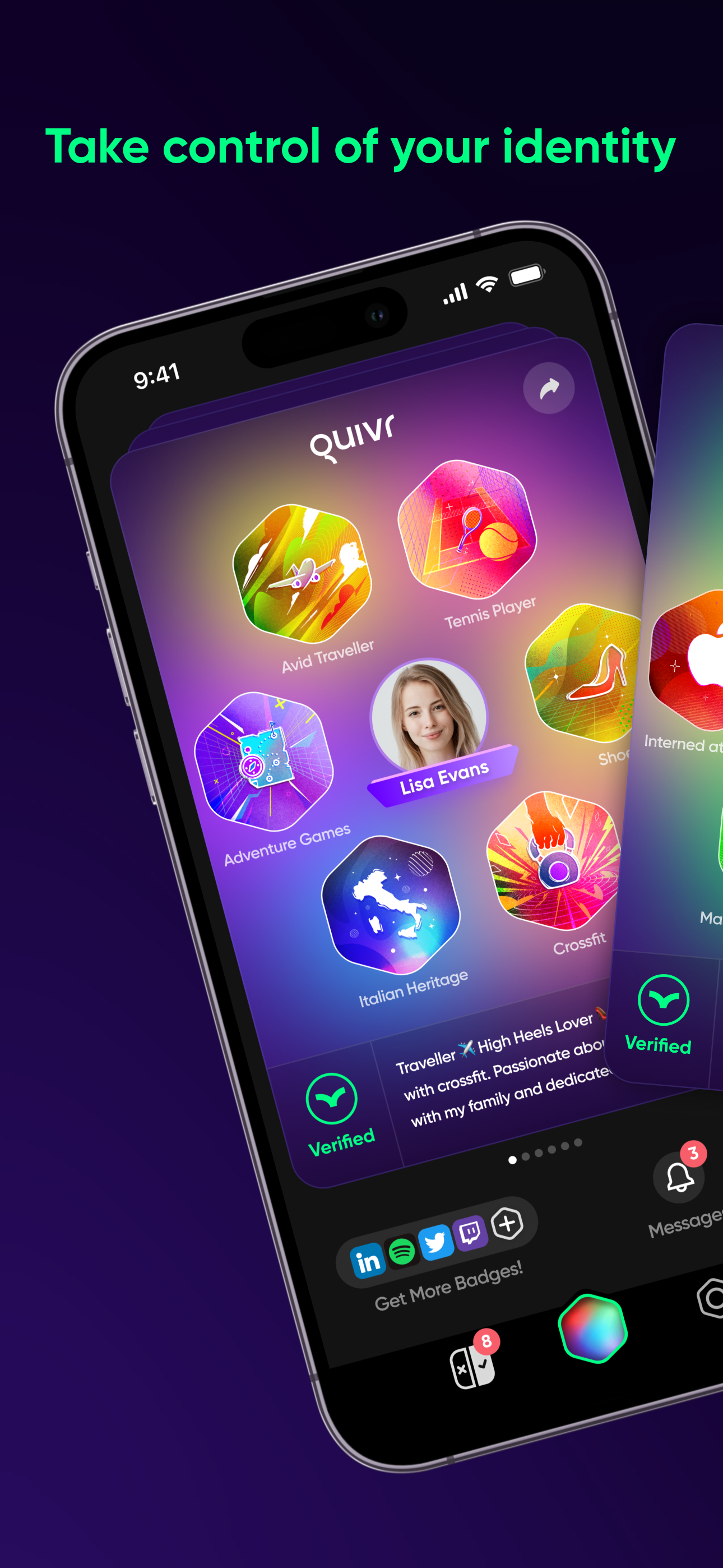
A decentralized identity platform that lets people verify who they are online by anchoring that identity to what they already do. Connect Spotify, Apple Music, Steam, your wallets — Quivr authenticates each footprint and mints the verification as an on-chain badge. Stack the badges into a shareable profile and prove your music taste, your gaming history, your community memberships.
The result is a digital identity you actually own: portable across apps, provable to anyone, no platform required to vouch for you. Built for a web where your interests, communities, and credentials travel with you instead of living inside one network's walled garden.
In hand
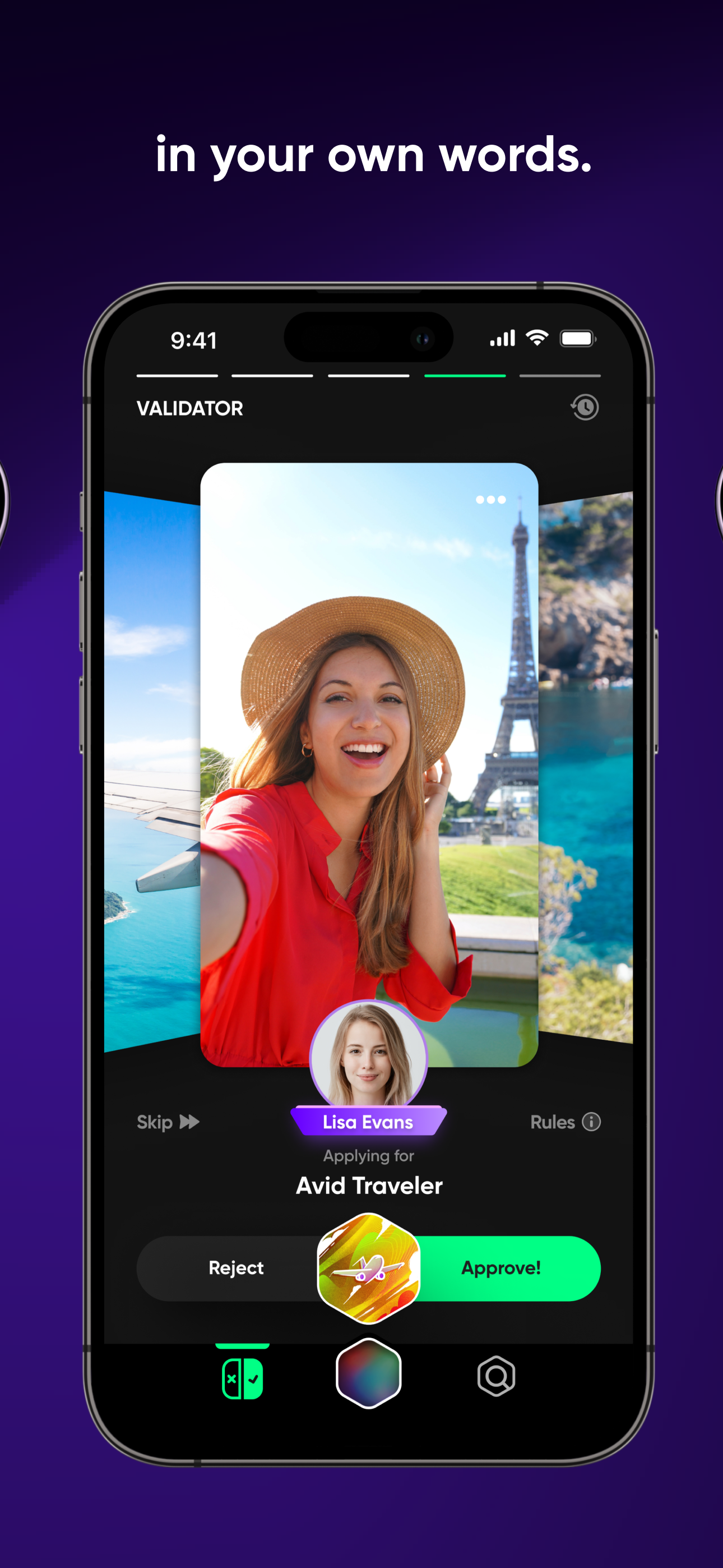
On screen: the validator — community applications reviewed and approved into badges. The device is the studio's own, a titanium phone built entirely in code, running the real capture.
The system
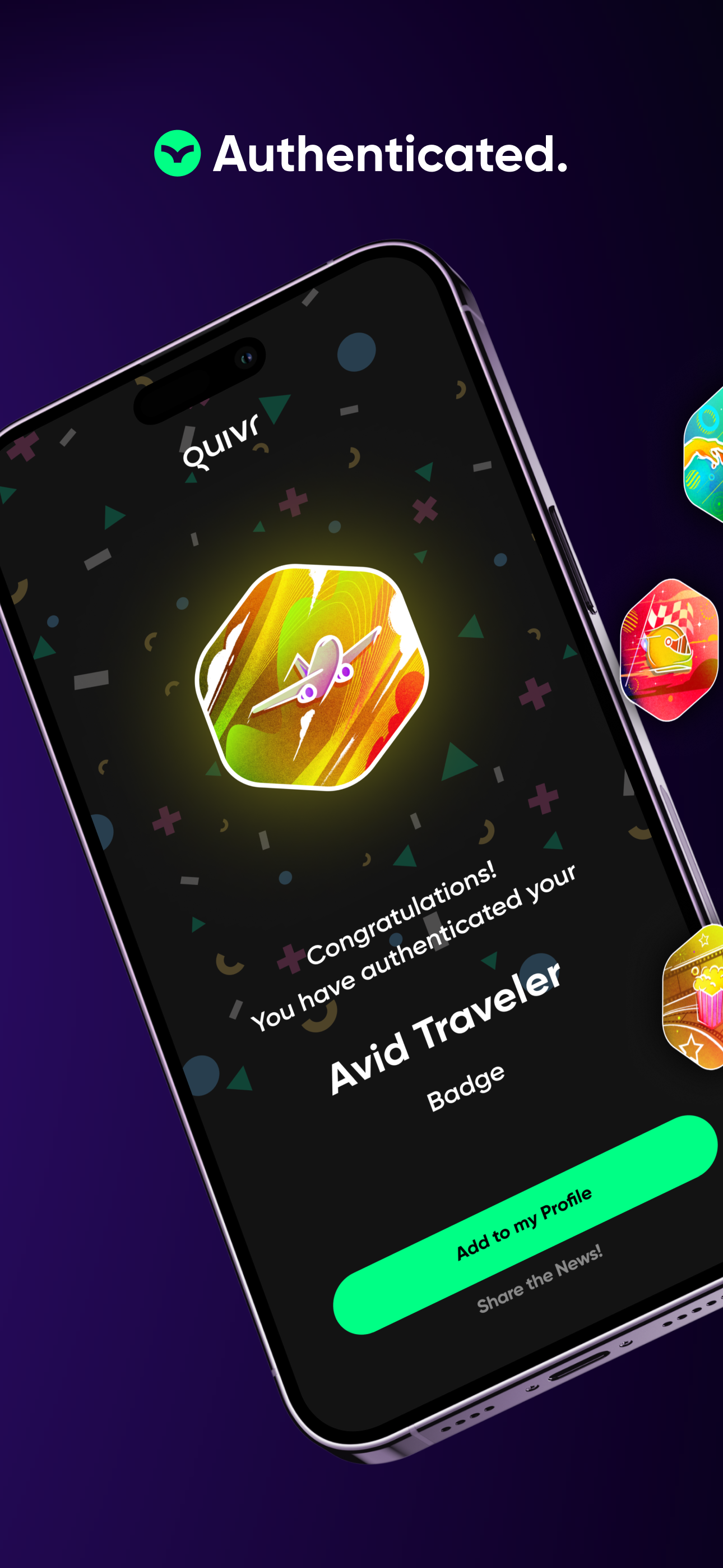
Connect a service, prove the footprint, mint the badge. Each authenticated account becomes another badge, and the badges build into a profile.
The badge wall
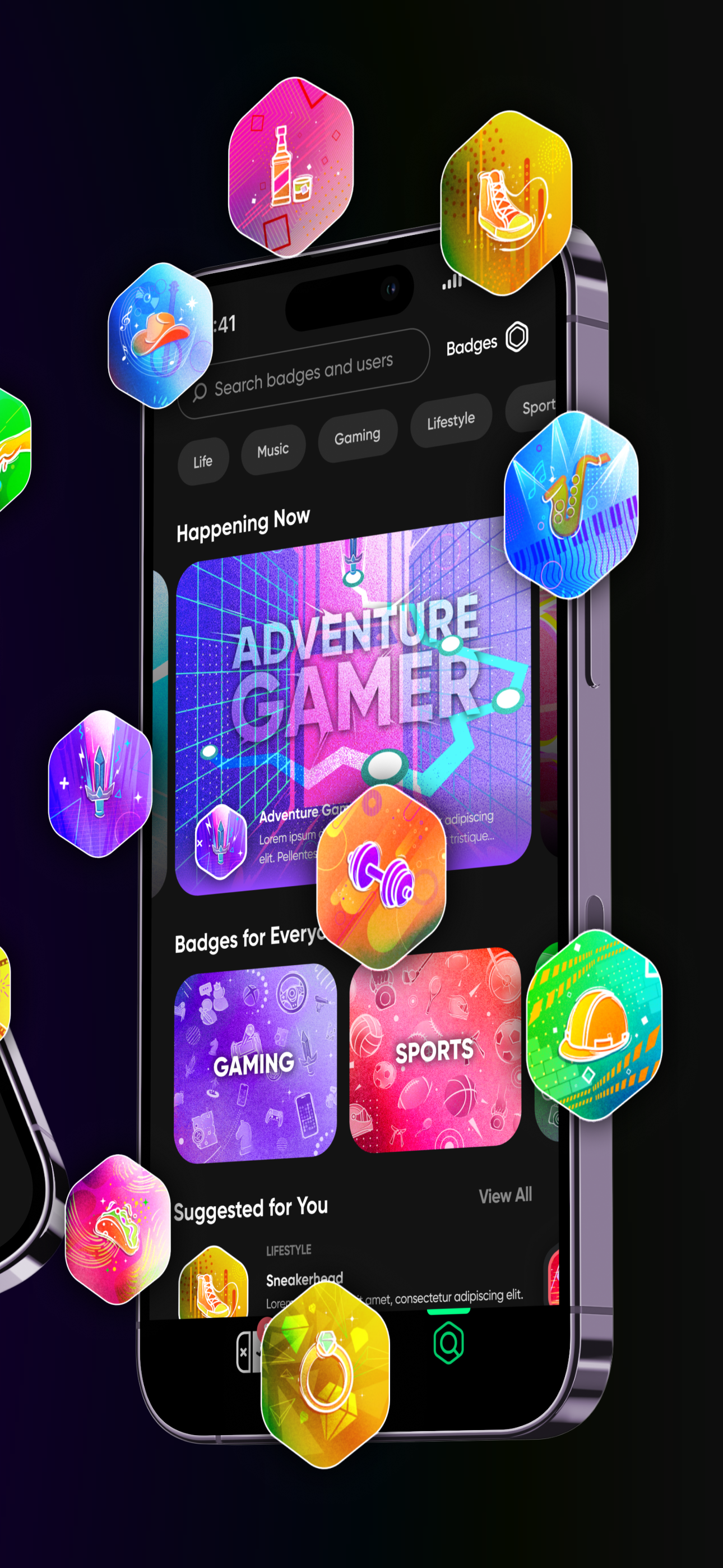
Music taste, gaming history, communities — every verified interest lands on the wall. A profile that reads as proof, not bio.
The job was making on-chain verification feel like collecting, not paperwork.
The cards
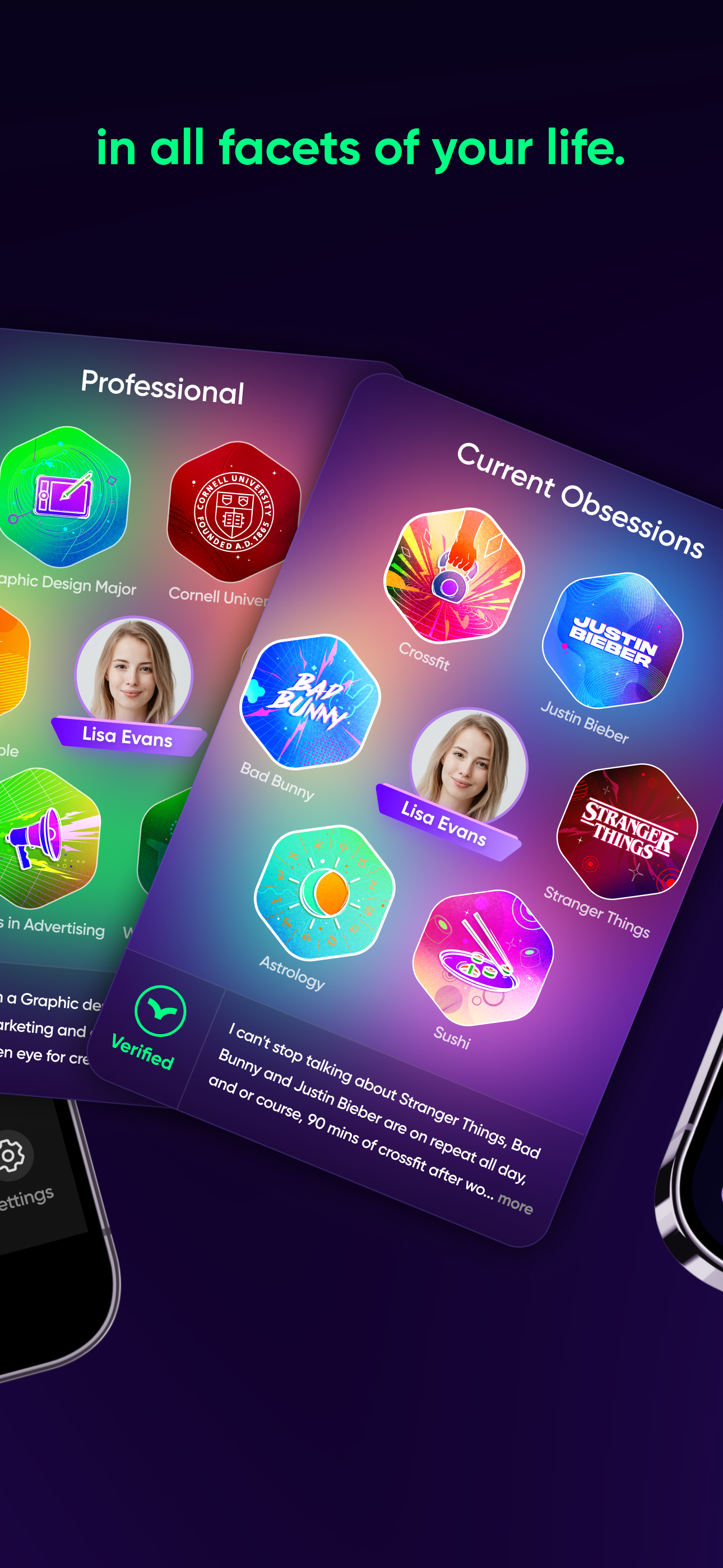
A profile is a deck, not a page. Cards you name yourself — Professional, Current Obsessions, Games I'm streaming rn — and the badges that belong under each one.
The tier above
Some badges outrank others. The Legendary ones keep a page of their own — the Quivrs who hold it, the video submissions that earned it, and a ladder from Community to Legendary.
The work
One hexagon, redrawn as a university crest, a plate of sushi, a map of Ireland, and still unmistakably Quivr. Somebody drew every one of them, and the app around them: the site, the badge library, the motion, the socials, the decks. Same somebody.
- Surfaces
- Mobile app · web · responsive
- System
- Badge library · light and dark profiles
- Motion
- Product films · motion graphics
- Collateral
- Socials · pitch decks